
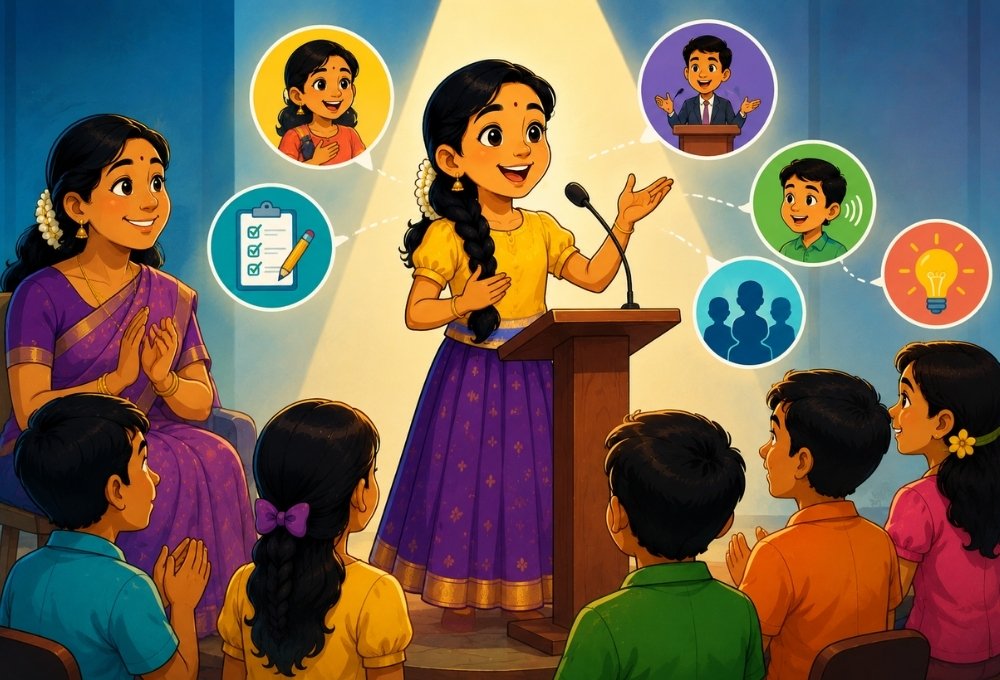

Public speaking is one of the most valuable life skills a child can develop. While many parents associate public speaking only with speeches or stage performances, its impact extends far beyond formal presentations. Public speaking influences confidence, communication ability, leadership development, academic participation, and emotional resilience.
Children who learn to express themselves clearly at an early age often become more confident not only in classrooms, but also in social situations, collaborative environments, and future professional settings. They become more willing to ask questions, share ideas, participate actively, and take initiative.
In contrast, many children struggle with hesitation, fear of judgment, or stage anxiety because they rarely receive opportunities to communicate openly in supportive environments.
At The Gift School, public speaking is approached not simply as a performance skill, but as an essential part of confidence-building and holistic child development.
Why Public Speaking Is Important for Children
Public speaking develops far more than speaking ability. It shapes how children think, organize ideas, regulate emotions, and interact with others.
Children who practice public speaking regularly often improve:
- communication clarity
- confidence and self-expression
- emotional control
- leadership ability
- listening and social interaction
- critical thinking skills
Public speaking also helps children become comfortable with visibility. Many students hesitate to participate because they fear making mistakes in front of others. Over time, this fear can limit classroom engagement, creativity, and leadership potential.
Learning to speak publicly helps children gradually overcome this fear in a healthy and structured way.
Why Many Children Develop Stage Fear
Stage fear is extremely common among children. In many cases, it does not come from lack of intelligence or capability, but from fear of judgment and self-consciousness.
Children may become anxious about:
- speaking in front of classmates
- making pronunciation mistakes
- forgetting words
- being laughed at
- appearing nervous
Modern educational environments sometimes unintentionally increase this pressure by emphasizing correctness over expression. As a result, children may begin avoiding participation altogether.
However, confidence in public speaking is rarely built through pressure. It develops through repeated positive experiences where children feel encouraged rather than criticized.
This is why supportive communication environments are essential during childhood.
Confidence Comes Before Fluency
One of the biggest misconceptions about public speaking is the belief that children must first become fluent speakers before they can speak confidently. In reality, confidence usually develops first.
Children become better speakers when they feel emotionally safe enough to express themselves without fear.
This means that improving public speaking skills is not simply about vocabulary or pronunciation. It also involves:
- emotional encouragement
- social comfort
- confidence-building
- positive participation experiences
When children are appreciated for trying rather than judged for perfection, they gradually become more expressive and natural communicators.
Storytelling Is One of the Best Ways to Improve Public Speaking
Storytelling is one of the most effective tools for helping children improve speaking confidence naturally. Unlike formal speeches, storytelling feels conversational and emotionally engaging.
Through storytelling, children learn how to:
- organize thoughts clearly
- express emotions naturally
- use imagination creatively
- communicate ideas confidently
- maintain audience attention
Storytelling also reduces performance pressure because children focus more on sharing experiences than on “performing correctly.”
This makes storytelling an excellent starting point for shy or hesitant children.
How Group Activities Improve Communication Confidence
Children often develop communication skills faster in collaborative environments where interaction feels natural and enjoyable.
Activities such as:
- group discussions
- role play
- team presentations
- debates
- creative projects
Help children become more comfortable speaking around peers.
These environments reduce the psychological pressure associated with formal public speaking while still improving expressive confidence.
Over time, repeated participation helps children become more socially adaptable and emotionally resilient.
Why Public Speaking Improves Academic Performance
Public speaking indirectly improves academic development because it encourages active participation in learning.
Students who communicate confidently are more likely to:
- ask questions
- clarify doubts
- participate in discussions
- explain ideas clearly
- engage more deeply with subjects
Public speaking also strengthens critical thinking because children learn how to organize and present ideas logically.
This improves both intellectual clarity and communication ability simultaneously.
The Connection Between Public Speaking and Leadership
Leadership and communication are deeply interconnected. Children who can communicate ideas clearly often become more influential in group settings because they are able to guide discussions, motivate peers, and express ideas confidently.
Public speaking helps children develop:
- self-awareness
- emotional control
- persuasive ability
- decision-making confidence
- social adaptability
These qualities are foundational for leadership development.
In the modern world, leadership increasingly depends not only on intelligence, but also on the ability to communicate with clarity, empathy, and confidence.
Why Public Speaking Matters in the AI Era
As Artificial Intelligence continues to automate technical and repetitive tasks, human-centered skills are becoming more valuable. Communication, leadership, emotional intelligence, and creativity are now considered essential future-ready abilities.
Students who can communicate effectively will likely hold a major advantage in future academic and professional environments.
Public speaking helps children prepare for:
- interviews
- presentations
- leadership opportunities
- collaborative workplaces
- entrepreneurial environments
In many ways, communication is becoming one of the defining skills of the future economy.
How The Gift School Helps Children Become Confident Speakers
At The Gift School Summer Camp 2026, communication and confidence-building activities are integrated into interactive learning experiences designed to help children become expressive and socially confident.
Students participate in:
- storytelling sessions
- collaborative learning activities
- presentations
- creative communication exercises
- leadership-oriented projects
The emphasis is on helping children become comfortable expressing themselves naturally rather than forcing rigid performance-based speaking.
This supportive environment allows confidence to develop gradually and authentically.
Practical Ways Parents Can Encourage Public Speaking at Home
Parents play an important role in helping children become confident communicators. Small daily practices often have a significant long-term impact.
Helpful habits include:
- encouraging regular conversation
- allowing children to express opinions freely
- reading stories aloud together
- appreciating effort rather than perfection
- reducing fear-based criticism
- creating opportunities for participation
Children improve fastest when communication becomes part of everyday life rather than a stressful performance activity.
Final Thoughts
Public speaking is far more than a stage skill. It is a confidence-building life skill that influences academic participation, emotional resilience, leadership development, and future success.
Children who learn to communicate confidently early in life often become more expressive, adaptable, and socially comfortable individuals. They become more willing to participate, explore ideas, and lead courageously in different environments.
In a future increasingly shaped by technology, human communication will continue to remain deeply valuable. Helping children develop public speaking confidence today is ultimately an investment in their long-term growth and future readiness.
Explore future-focused student development programs at The Gift School Official Website.
Frequently Asked Questions
Why is public speaking important for children?
Public speaking improves confidence, communication ability, leadership skills, emotional resilience, and academic participation.
How can shy children improve public speaking?
Shy children improve through gradual participation, storytelling activities, group interaction, positive encouragement, and supportive communication environments.
At what age should children learn public speaking?
Children can begin developing communication and public speaking confidence from an early age through storytelling, conversations, and group participation.
Does public speaking improve confidence?
Yes. Public speaking helps children overcome hesitation, express ideas clearly, and become more comfortable in social and academic situations.
How can parents help children improve speaking skills?
Parents can encourage open conversation, storytelling, reading aloud, participation in discussions, and positive communication experiences at home.